How manufacturers say to clean an air fryer
Fryrank Lab has not enrolled in Amazon Associates or another affiliate program as of this page. There are no checkout buttons, /go/ short links, or affiliate tags here. If that changes, links will be marked rel="nofollow sponsored" and this notice will be updated. Affiliate disclosure
Air-fryer manuals usually separate three jobs: emptying crumbs, washing the removable basket or trays, and wiping the fixed heater cavity. This guide stays on those manufacturer instructions. It is not a review of aftermarket liners, and it does not recommend a cleaning product the maker did not name.
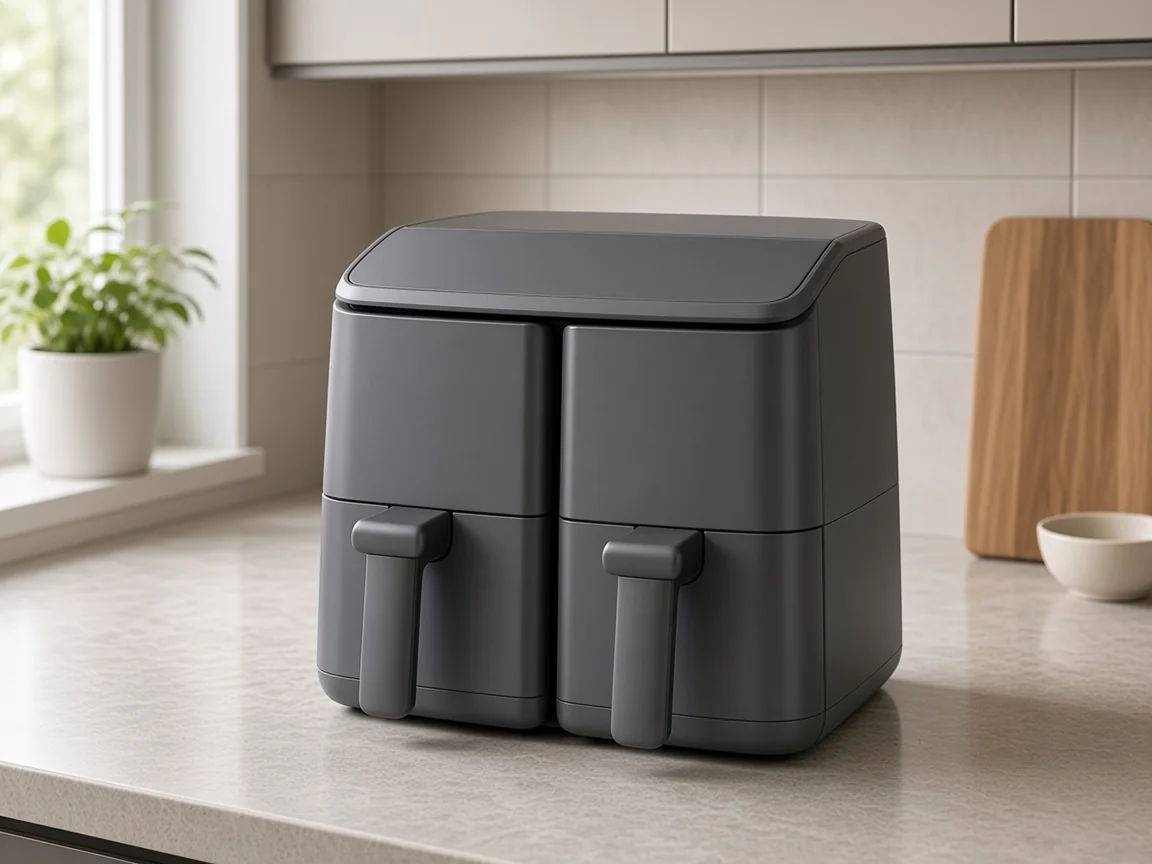
Read the wash method for each part
Removable baskets and crisper plates are often labeled dishwasher-safe in marketing, then limited in the manual (“top rack,” “no abrasive pads,” “hand-wash to preserve the coating”). Follow the stricter sentence. A PTFE or ceramic coating that the sheet tells you not to scratch is a physical constraint: metal tongs, steel wool, and some lined parchment setups can void the care instructions even if they are common on video sites.
The heater cavity and the heating element are usually wipe-only, with the unit unplugged and cool. Liquids poured into the body are a manual violation on most countertop machines, not a deep-clean technique.
Liners are accessories, not a substitute for the manual
If a maker blesses parchment or foil, the note is usually narrow: do not block airflow, do not let a liner touch the element, and do not preheat an empty liner. If the manual is silent, a liner is an experiment you are choosing, not an official cleaning method. A liner also does not change a recalled model into a current one.
Fat, smoke, and residue
Owner complaints about smoke often track leftover grease in the basket or on the element, not only the food. The manufacturer’s stated preheat and emptying routine after fatty foods is the first control. If a current sheet also lists a maximum oil amount or a “do not exceed” food-load line, that is a capacity rule as well as a cleaning rule. See basket volume and cabinet clearance.
A short decision path
- If you will only wash parts in a dishwasher, buy a model whose current manual says the baskets and plates may go in the dishwasher, and still check for coating exceptions.
- If you refuse PTFE, do not stop at “dishwasher-safe nonstick.” Use the ceramic and stainless page and then read that model’s care section.
- If you wanted zero removable parts, an oven-style machine still has trays and a crumb path — read those steps before you assume it is simpler.